> For the complete documentation index, see [llms.txt](https://docs.whitespots.io/llms.txt). Markdown versions of documentation pages are available by appending `.md` to page URLs; this page is available as [Markdown](https://docs.whitespots.io/appsec-portal/features/asset-management/adding-a-product-asset.md).
# Adding a product asset
{% hint style="warning" %}
To ensure the proper functioning of Auditor, include assets for products created in the Portal in version v23.10.1 and earlier.
{% endhint %}
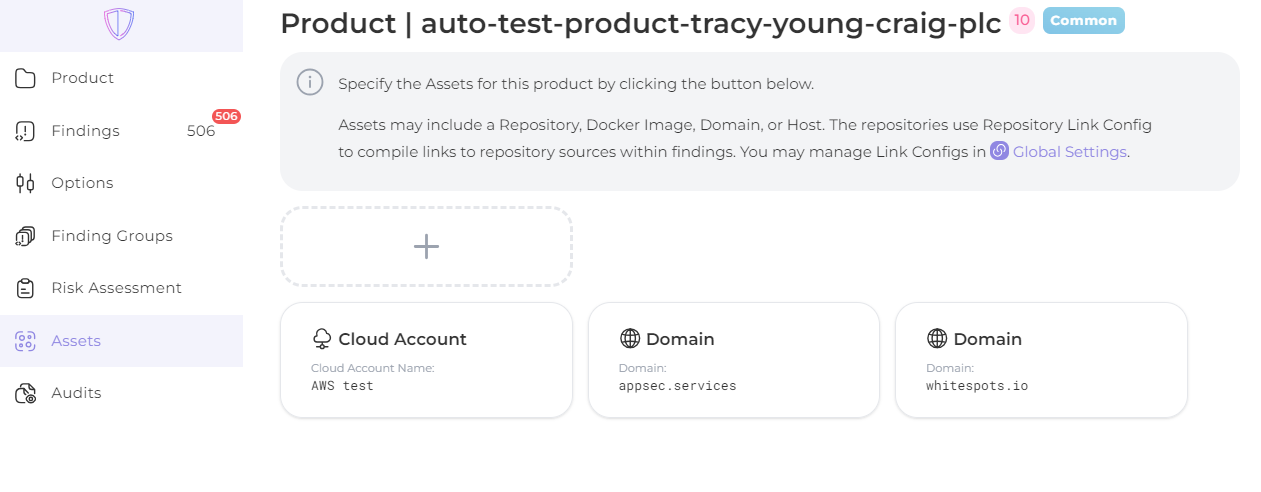
If the product has already been [created](/appsec-portal/features/working-with-products.md), add its Asset data. To do this, select the product on the Product page
Specify the location of the product by adding information about:
* [**Repository**](#repository): to analyse the product code in the repository
* [**Docker image**](#docker-image): to analyse your image
* [**Domain or Host**](#domain-and-host): to analyse your web product
* [**Cloud Account:**](#cloud-account) to analyse the product in a cloud account
## Repository
In the Repository tab, fill in the required fields:
1. **Repository SSH URL**: enter the address of your repository in a specific format, for example: :whitespots-public/appsec-portal.git
1. **Repository Link config**: repository source link used to link the portal to your repository based on a created pattern
Select a [pre-created](/appsec-portal/general-portal-settings/repository-link-configs.md) pattern from the drop-down list or use the find a matching config function
Or create a new pattern directly from this section
3. Save the created asset by clicking on the **Create** button
## Docker Image
In the **Repository tab** enter the address of the **registry** where your product is located and click **Create**
## Domain & Host
In the **Domain tab** enter **domain name**, for example whitespots.io
In the **Host tab** enter **host IP**, for example 83.110.124.0
Click **Create**
## Cloud Account
In the **Cloud account tab** enter the **Cloud Account Name** where your product is located, its **Cloud key ID** and **Cloud key secret** and click **Create**
Apply the created assets when using the[ **Auditor**](/auditor/features/run-audit.md)
 information about:
* [**Repository**](#repository): to analyse the product code in the repository
* [**Docker image**](#docker-image): to analyse your image
* [**Domain or Host**](#domain-and-host): to analyse your web product
* [**Cloud Account:**](#cloud-account) to analyse the product in a cloud account
information about:
* [**Repository**](#repository): to analyse the product code in the repository
* [**Docker image**](#docker-image): to analyse your image
* [**Domain or Host**](#domain-and-host): to analyse your web product
* [**Cloud Account:**](#cloud-account) to analyse the product in a cloud account


